The second movement, marked Andante in 2/2, begins in C major, which stands in a subdominant relation to the sonata’s home key of G major. Notably, Beethoven adopts variation form here—the first time he uses a variation movement in a piano sonata. The movement consists of a 20-bar theme followed by three variations.
Theme
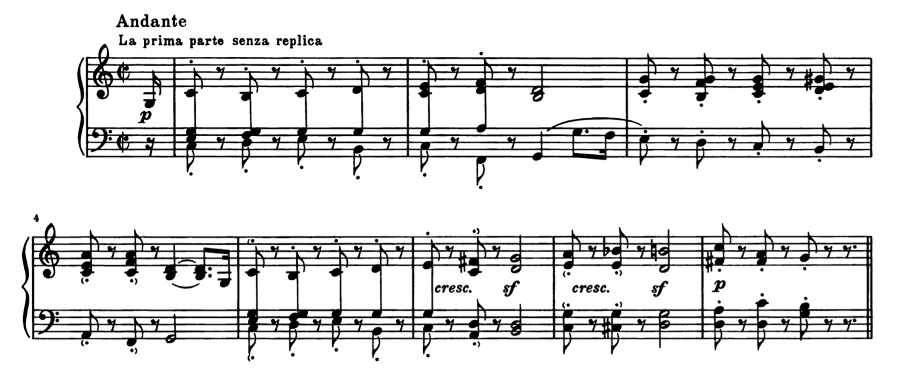
The theme spans 20 bars in C major and follows a rounded binary layout: a (mm. 1–8), b (mm. 9–12), a′ (mm. 13–20). The first 8 bars form a parallel period (two like-constructed phrases). The overall concept favors short, detached writing through staccatos and rests; melodic motion is understated, and the music proceeds largely in vertical chordal units. In mm. 2 and 4 a half cadence on V appears. In the second subphrase, the music modulates to the dominant (G major) and ends with a perfect authentic cadence (PAC) in m. 8.
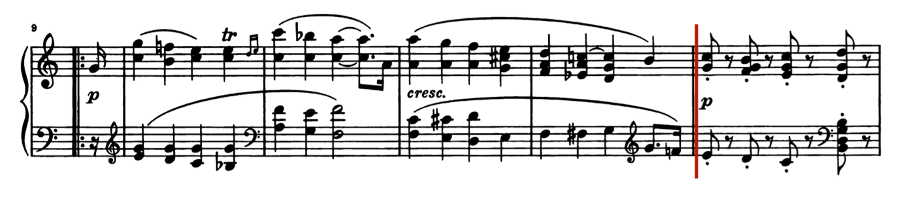
The b section contrasts with a. While the chordal, vertical motion continues, the writing now uses longer legato phrases; ornaments appear that were absent before. Tonally, a string of applied chords produces chromatic modulation; the music returns to C major and closes with a half cadence, ending b.
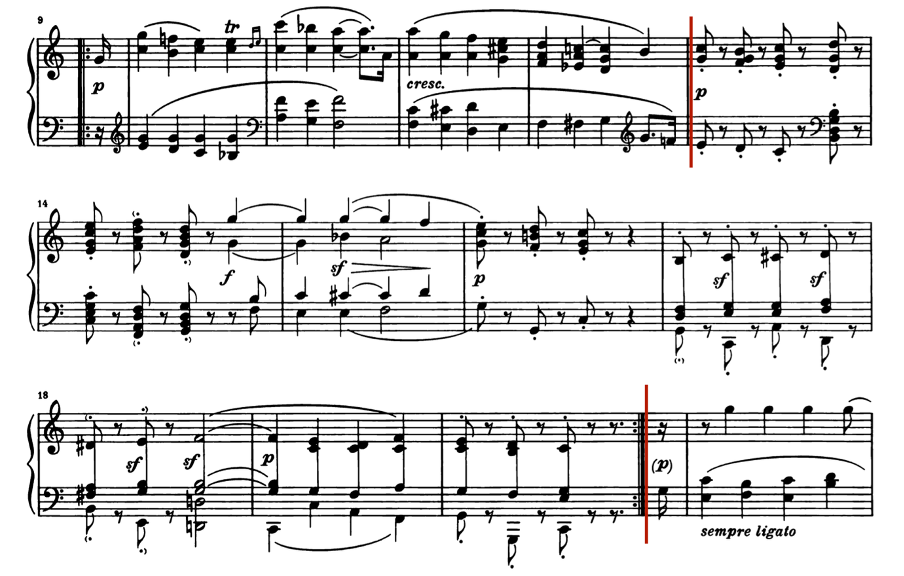
After the half cadence, a′ follows. The a-material is restated an octave higher; in the bass the phrase now begins in first inversion, carried over from the preceding context. In mm. 14–15 and 18–19 the legato chordal motion recalls b, making a′ more varied. Starting and ending in C major, the theme closes with a PAC.
Variation I
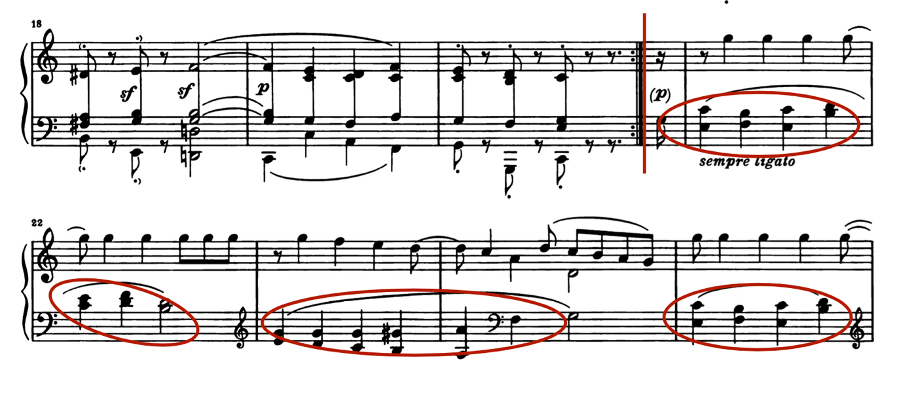
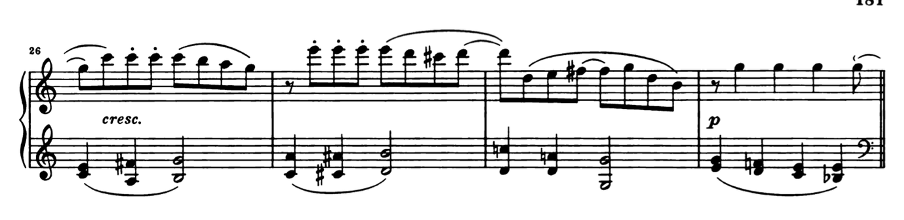
Variation I preserves the theme’s rounded binary design and is a strict variation: key, main lines, and structure remain the same (C major). The theme’s motive reappears in the left hand but now in legato phrases (replacing the theme’s staccato + rests). The right hand introduces repeated-note eighths offset against the left hand, creating syncopation; from m. 23 that syncopated effect is intensified. At m. 26 the repeated notes are reinforced in staccato and the eighth-note motion grows more active, finishing a and preparing b. As in the theme, a closes on I of G (dominant key).
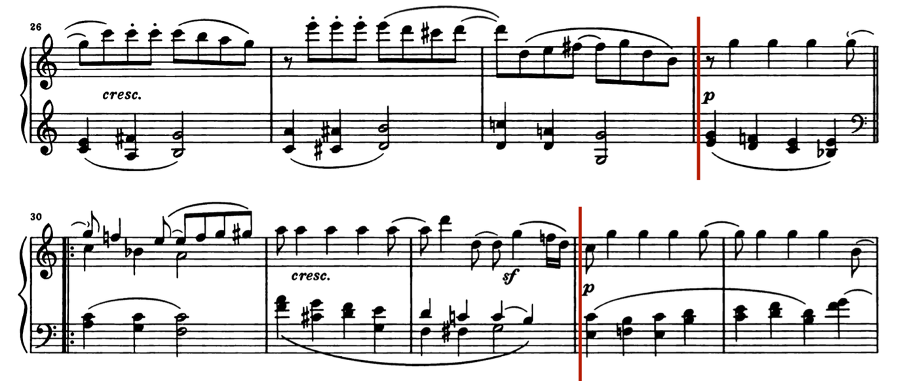
B (mm. 29–32) begins much like a; from m. 30 the right hand’s polyphonic writing becomes more complex. The harmonic motion turns back toward C major; after a crescendo in mm. 31–32 a sforzando articulates a strong half cadence, leading to a′.
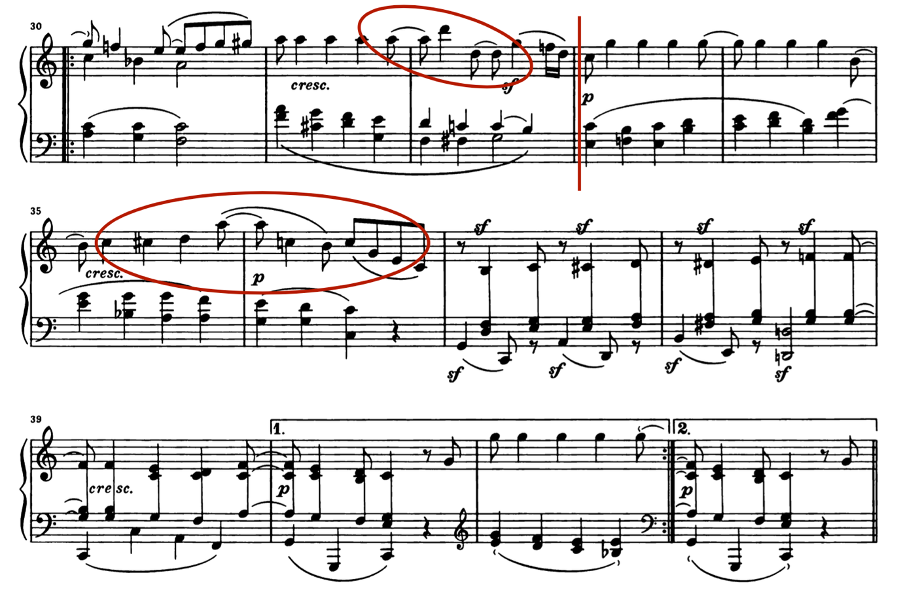
In a′ the right-hand figure at m. 35 recalls b. From m. 37 the hands cross, driving a strong rising phrase with sforzandi. Up to the V–I cadence at m. 40 the cross-hand motion is maintained, closing Variation I.
Variation II
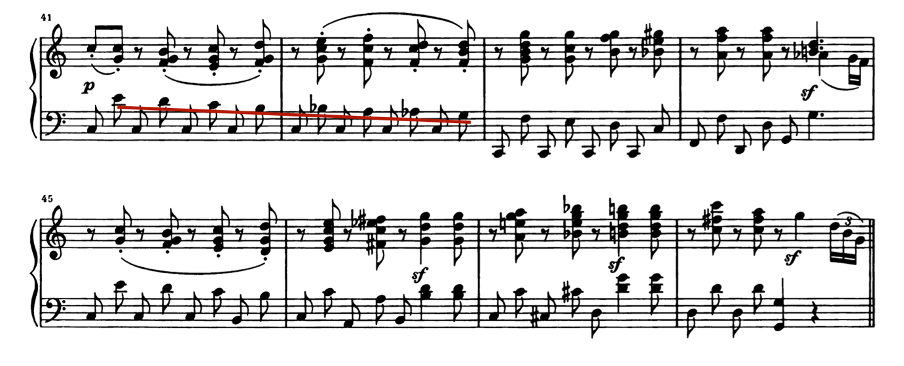 Variation II is likewise a strict variation—key, structure, and main lines remain close to the theme. Here staccatos and rests are heightened, and the vertical chordal character is strengthened. In a, the right hand presents the theme motive delayed by an eighth rest; the left hand sustains a C pedal on strong beats, producing cross-accent and a quicker eighth-note drive. In the left-hand inner voice a sequential descending line is salient. At the half cadence (m. 4 of the phrase) the use of A♭ briefly colors the mode toward minor. At m. 8 a G-major cadence closes a, as in the theme.

The b section proceeds similarly to a in its outset (RH slur-staccato recalls the start of a). The left-hand accompaniment changes: unlike a, where an inner single line descended on weak beats, b uses repeated chords on weak beats, intensifying weak-beat accents overall. At m. 52 a half cadence in C leads to a′. Short 16th-note triplet ornaments recur at phrase ends.
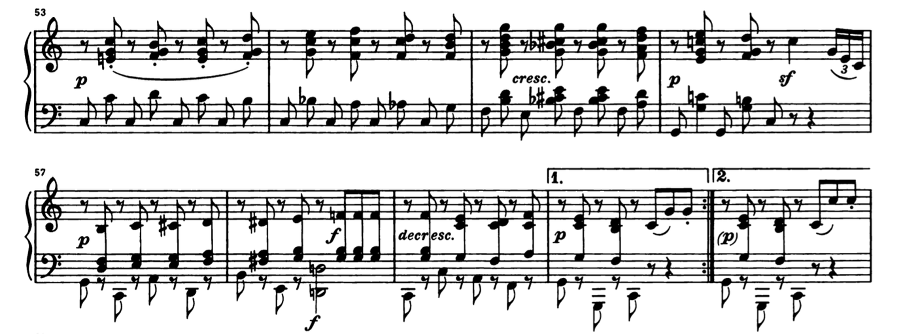
A′ begins as before. At m. 55 the left hand now imports the weak-beat chordal reinforcement heard in b. The ascending motion in mm. 57–58 halts strongly on V (on the second beat of m. 58); the music then cadences in C major, closing Variation II.

A four-bar bridge—drawn from Variation II’s features—follows over a V pedal, leading to the final variation.
Variation III
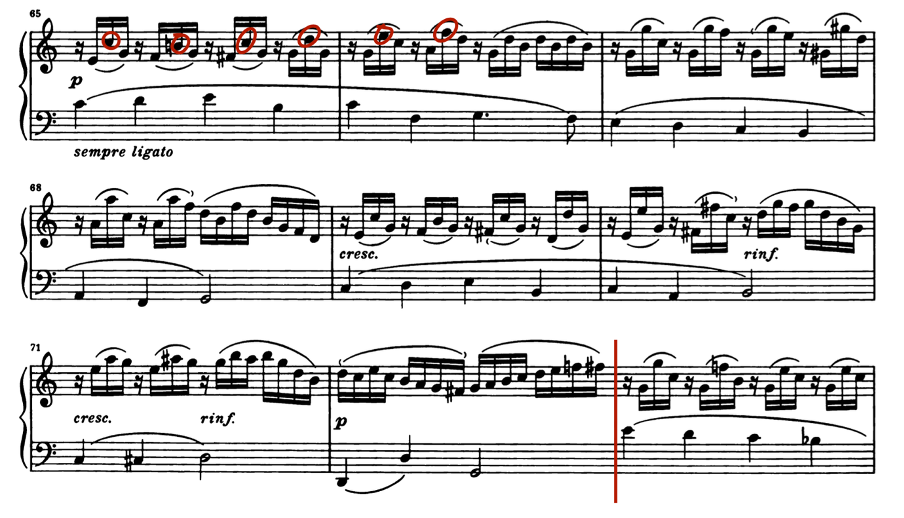
Like its predecessors, Variation III is a strict variation; the left-hand bass is retained. Its hallmark is a constant 16th-note arpeggiated texture as the basic motive. In the right hand, every second note traces the theme’s melody (the cantus emerging through the figuration). The harmonic plan follows the established pattern; at m. 72 the music cadences on I of G and proceeds to b.

The b of Variation III has few new surface traits; it flows analogously to a. The harmony returns to C major, and at m. 76 a half cadence leads to a′.
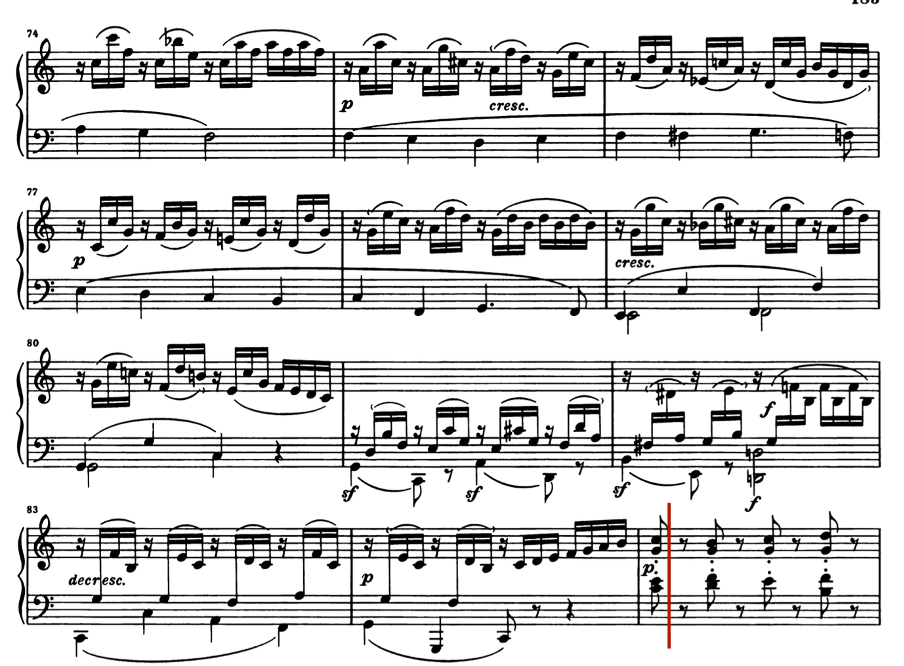
A′ follows the theme’s design, adapted to the Variation III texture. A registral change marks this reprise: from m. 81 the ascending line is launched from the low register, with sforzandi reinforcing the rising energy. After a PAC in m. 84, an ascending 16th-note C-major scale in the right hand leads directly into the coda.
Coda
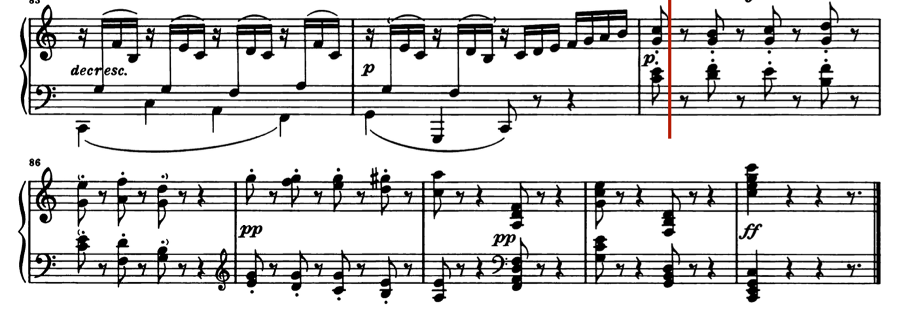
The coda is six bars long: it restates the theme once more and, from pp, ends abruptly with a fortissimo chord.





The second movement, marked Andante in 2/2, begins in C major, which stands in a subdominant relation to the sonata’s home key of G major. Notably, Beethoven adopts variation form here—the first time he uses a variation movement in a piano sonata. The movement consists of a 20-bar theme followed by three variations.
Theme
The theme spans 20 bars in C major and follows a rounded binary layout: a (mm. 1–8), b (mm. 9–12), a′ (mm. 13–20). The first 8 bars form a parallel period (two like-constructed phrases). The overall concept favors short, detached writing through staccatos and rests; melodic motion is understated, and the music proceeds largely in vertical chordal units. In mm. 2 and 4 a half cadence on V appears. In the second subphrase, the music modulates to the dominant (G major) and ends with a perfect authentic cadence (PAC) in m. 8.
The b section contrasts with a. While the chordal, vertical motion continues, the writing now uses longer legato phrases; ornaments appear that were absent before. Tonally, a string of applied chords produces chromatic modulation; the music returns to C major and closes with a half cadence, ending b.
After the half cadence, a′ follows. The a-material is restated an octave higher; in the bass the phrase now begins in first inversion, carried over from the preceding context. In mm. 14–15 and 18–19 the legato chordal motion recalls b, making a′ more varied. Starting and ending in C major, the theme closes with a PAC.
Variation I
Variation I preserves the theme’s rounded binary design and is a strict variation: key, main lines, and structure remain the same (C major). The theme’s motive reappears in the left hand but now in legato phrases (replacing the theme’s staccato + rests). The right hand introduces repeated-note eighths offset against the left hand, creating syncopation; from m. 23 that syncopated effect is intensified. At m. 26 the repeated notes are reinforced in staccato and the eighth-note motion grows more active, finishing a and preparing b. As in the theme, a closes on I of G (dominant key).
B (mm. 29–32) begins much like a; from m. 30 the right hand’s polyphonic writing becomes more complex. The harmonic motion turns back toward C major; after a crescendo in mm. 31–32 a sforzando articulates a strong half cadence, leading to a′.
In a′ the right-hand figure at m. 35 recalls b. From m. 37 the hands cross, driving a strong rising phrase with sforzandi. Up to the V–I cadence at m. 40 the cross-hand motion is maintained, closing Variation I.
Variation II
The b section proceeds similarly to a in its outset (RH slur-staccato recalls the start of a). The left-hand accompaniment changes: unlike a, where an inner single line descended on weak beats, b uses repeated chords on weak beats, intensifying weak-beat accents overall. At m. 52 a half cadence in C leads to a′. Short 16th-note triplet ornaments recur at phrase ends.
A′ begins as before. At m. 55 the left hand now imports the weak-beat chordal reinforcement heard in b. The ascending motion in mm. 57–58 halts strongly on V (on the second beat of m. 58); the music then cadences in C major, closing Variation II.
A four-bar bridge—drawn from Variation II’s features—follows over a V pedal, leading to the final variation.
Variation III
Like its predecessors, Variation III is a strict variation; the left-hand bass is retained. Its hallmark is a constant 16th-note arpeggiated texture as the basic motive. In the right hand, every second note traces the theme’s melody (the cantus emerging through the figuration). The harmonic plan follows the established pattern; at m. 72 the music cadences on I of G and proceeds to b.
The b of Variation III has few new surface traits; it flows analogously to a. The harmony returns to C major, and at m. 76 a half cadence leads to a′.
A′ follows the theme’s design, adapted to the Variation III texture. A registral change marks this reprise: from m. 81 the ascending line is launched from the low register, with sforzandi reinforcing the rising energy. After a PAC in m. 84, an ascending 16th-note C-major scale in the right hand leads directly into the coda.
Coda
The coda is six bars long: it restates the theme once more and, from pp, ends abruptly with a fortissimo chord.