The third movement, in E major and 4/4 with the marking Allegro commodo, is laid out as a rondo: A–B–A–C–A–B–A.
A
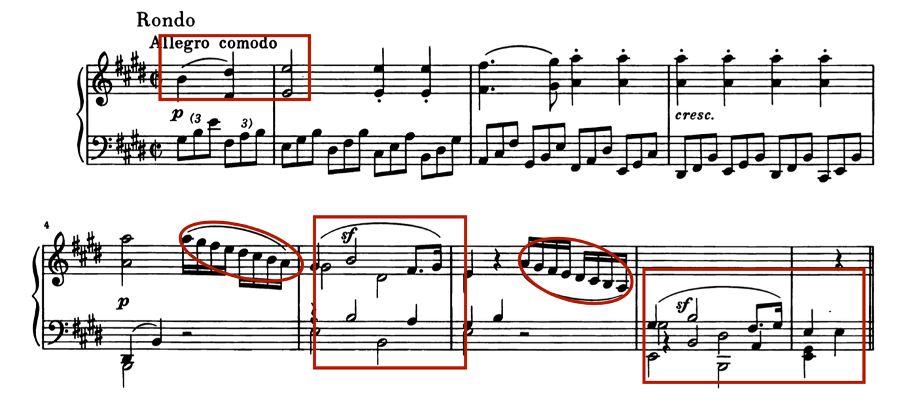
It begins in E major. In the right hand, the opening figure leaps from a single note to an octave, a gesture reminiscent of the first movement’s first theme, thereby projecting inter-movement unity.
The A section’s main building blocks are: a right-hand figure that recalls the first movement, a left-hand triplet accompaniment, a descending sixteenth-note line at m. 4, and polyphonic writing that checks the flow and moves in quarter-note units at mm. 5 and 7. At mm. 7–8 a V–I perfect authentic cadence in E major is heard.
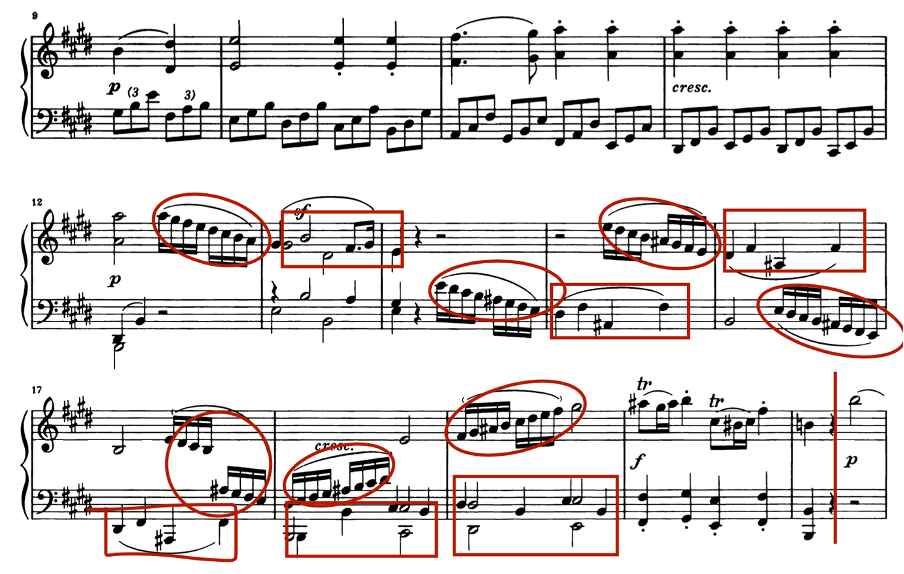
The next phrase reprises the first. The first four bars return verbatim. From m. 12 the music develops using the descending sixteenth-note line; a figure that had previously appeared twice only in the right hand now alternates between the hands. From m. 14 the harmony modulates to B major, the dominant. The line that had been descending at m. 17 ascends at m. 18 and is developed anew; after two ascents, with a grace note, a cadence in B major arrives and the music proceeds. The boxed figure in this span also recurs repeatedly.
B
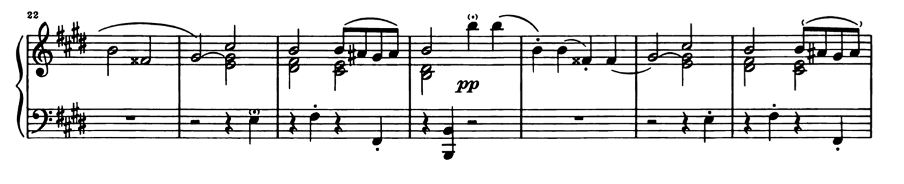
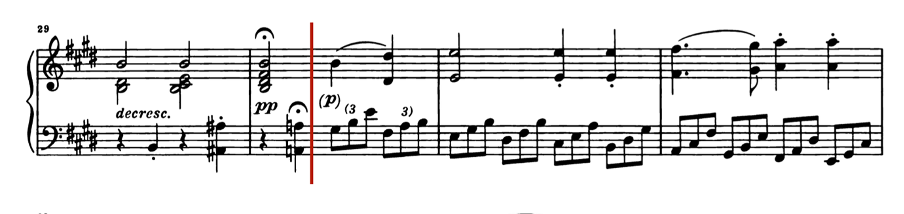
The music continues in B major, the dominant of A. Compared with A, B is relatively short and is characterized by wide leaps. It can even be heard as a theme built from the boxed figure used in A. Befitting its brevity, the design is simple, with tonic and dominant strongly emphasized. With the cadence at m. 30, the piece returns to A. Through a chromatic bass B–A♯–A, it modulates back to E major.
A′
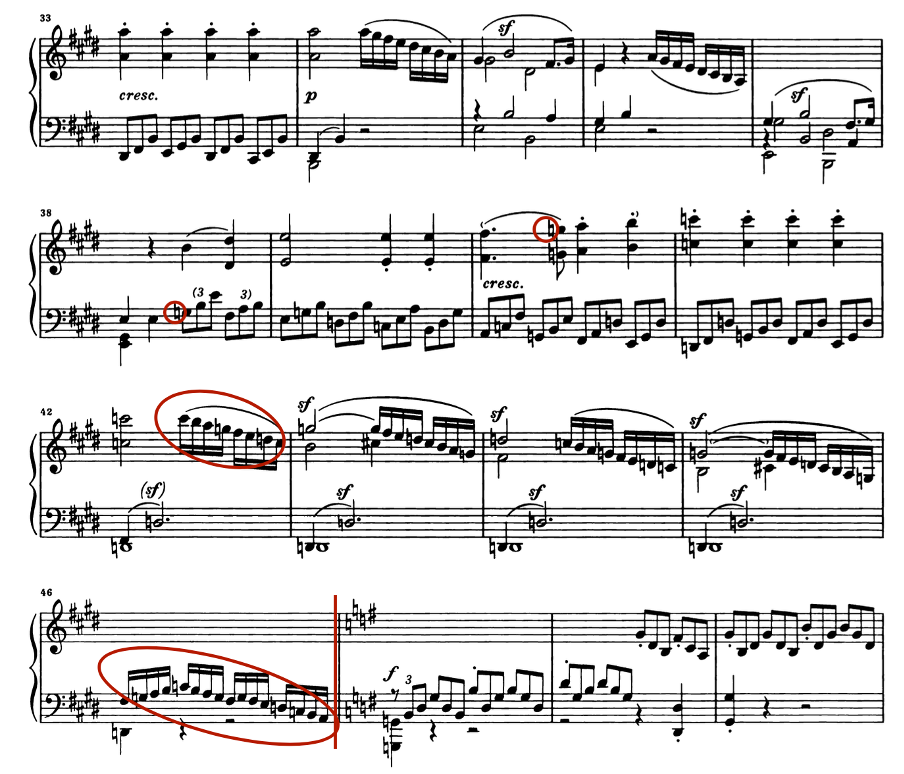
The A section reappears. The first eight bars are identical to the initial A in the tonic. From m. 38 the music moves to the parallel minor (e minor) and is developed; following a left-hand bass that descends by seconds, it moves naturally to G major, the relative of e minor. From m. 42, over a dominant pedal in G, the principal motive—the descending sixteenth-note figure—is repeated. Over four bars the repetition emphasizes V of G; at m. 46 the sixteenth-note figure is developed once more and the piece moves on.
C
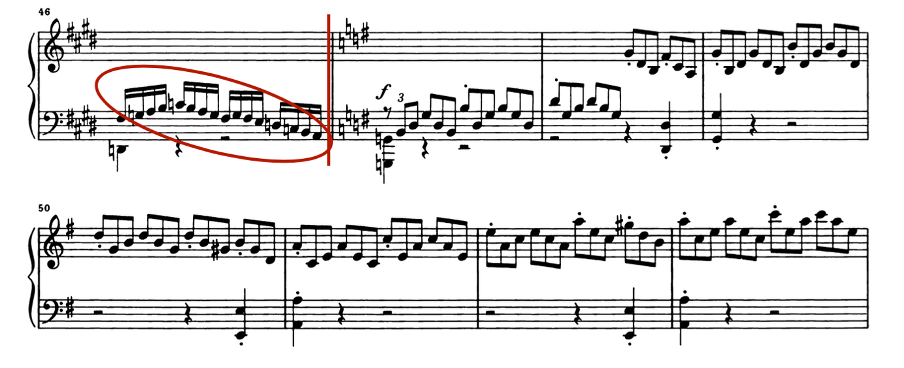
Proceeding from V of G, the C section begins on I. In the left hand, staccato V–I motions appear with little large-scale movement. In the right hand, the triplets formerly used as the left-hand accompaniment in A now become the main rhythm and drive the discourse. At m. 50 the harmony turns to a minor and presents V–I twice through m. 53. A notable detail: when the right hand is active, staccatos are placed on the strong beats (except the second)—a striking surface feature.
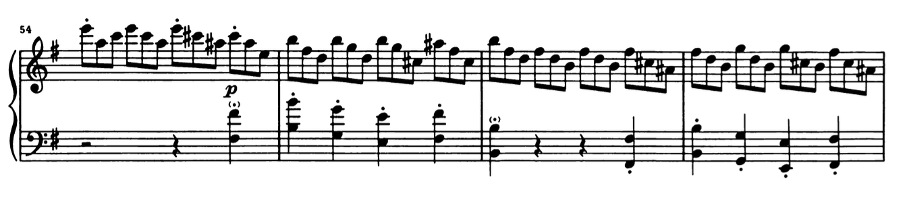
At m. 54 the music modulates to b minor. The left hand’s span grows more expansive: after the initial V–I, it traces VI – ii⁶ – V – I, lengthening the left-hand phrase. As in the a-minor passage, a cadence in b minor is repeated twice, then the piece moves on.
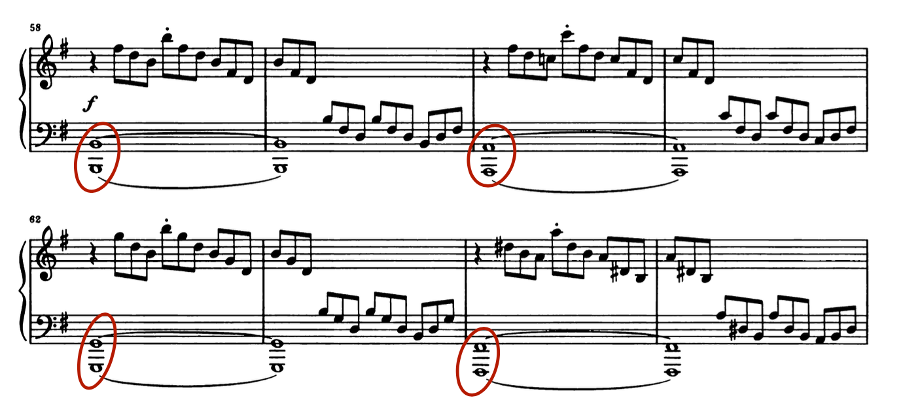
The continuation further develops figures heard thus far. The left hand’s triplet-based arpeggios now range more widely. The bass line in the left hand descends by seconds in two-bar units, and in the process the music naturally moves to e minor. At mm. 64–65 a V⁶₄ in e minor leads to i.
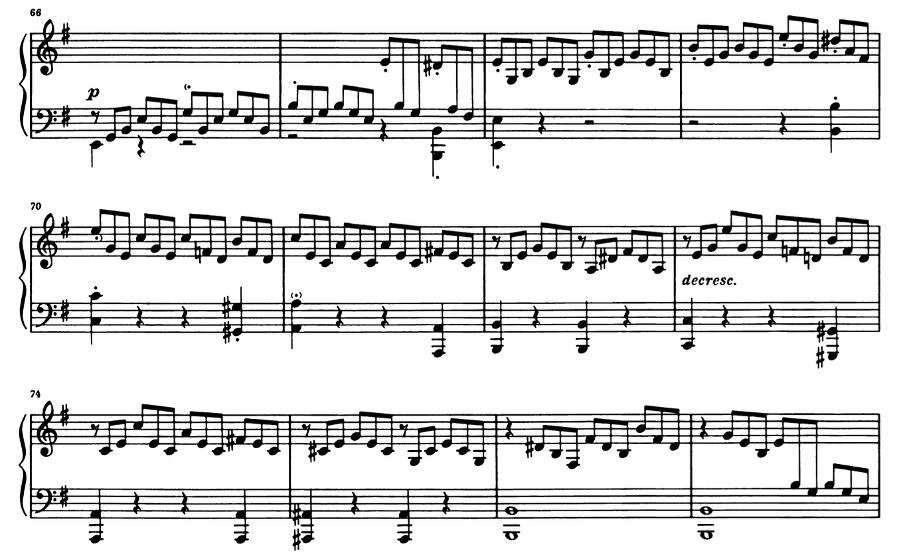
From m. 66 the passage begins as the C section first did. Unlike the earlier start in G major, it now begins in e minor, its relative. The left hand again enters with V–I. From here the left-hand motion changes, the right hand becomes more fragmented, and the phrase units shorten. A descending line with decrescendo further distinguishes this span from the earlier one. From m. 76 one can hear the preparation for the return of A: over a dominant pedal, the triplet arpeggios push forward.
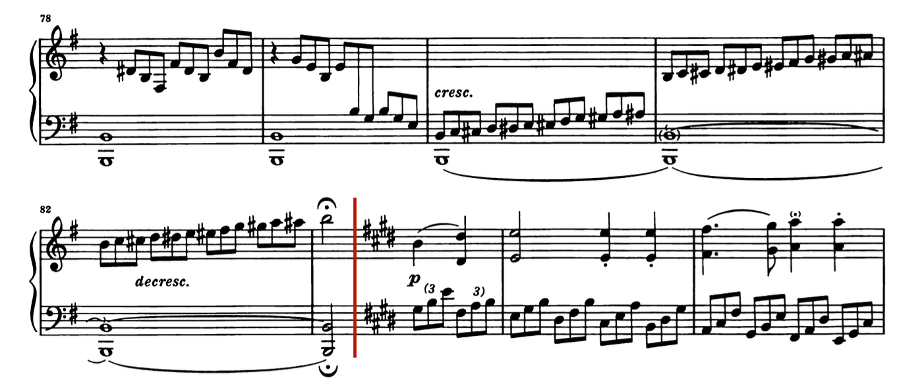
At m. 80 the line climbs chromatically from the low register up to high B, re-emphasizing the dominant. The music then returns to the tonic E major, and A reappears.
A″
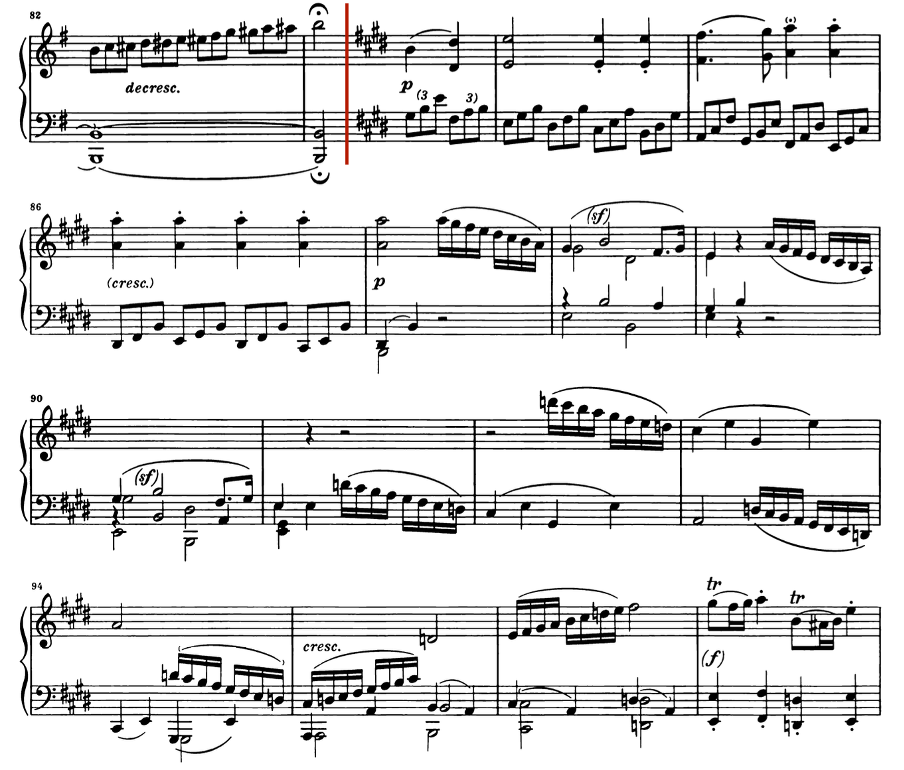
This reprise proceeds much like A and begins again in E major. Although the figure itself does not change, a key-scheme difference emerges: unlike A, whose second phrase modulated to B major, A″ modulates to A major. With a cadence in A major, A″ closes and the music turns to B′.
B′
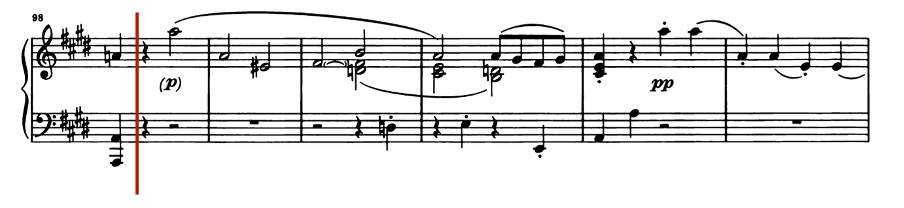
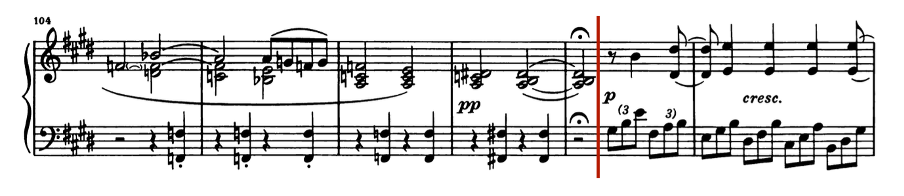
Apart from key, B′ is the same as B: instead of starting in B major, it now begins in A major. Another change arrives at m. 104, where the harmony shifts—notably—to F major, a flat-side key. Through the chromatic line F–F♯, E–D♯ in mm. 105–107, the harmony proceeds to V of E, leading to the final return of A.
A″′
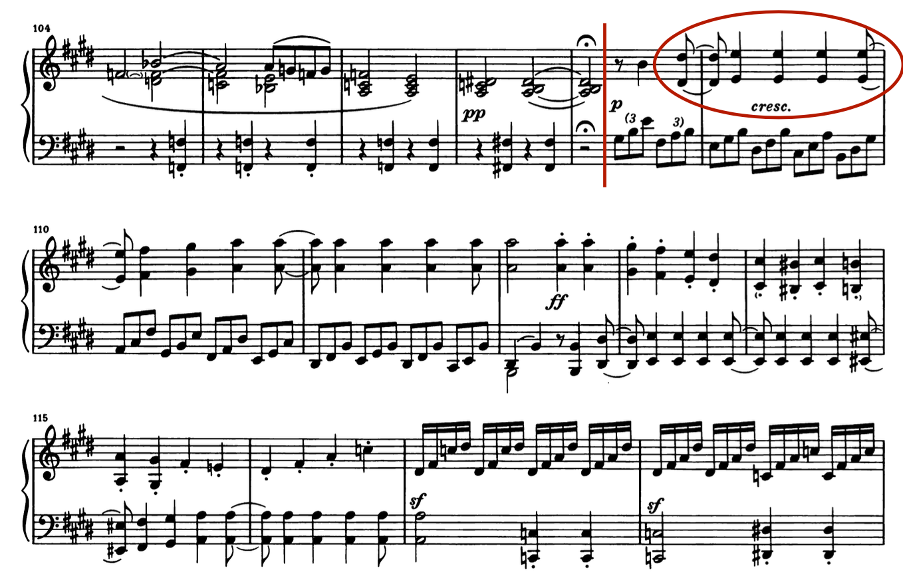
This is the last reprise of A, beginning as before in E major. The most striking new feature is the right-hand rhythm: unlike the previous A’s that moved on the beat, this third reprise shifts the right hand off the beat with syncopation; combined with the left-hand triplets, this yields a far more rhythmically intricate feel.
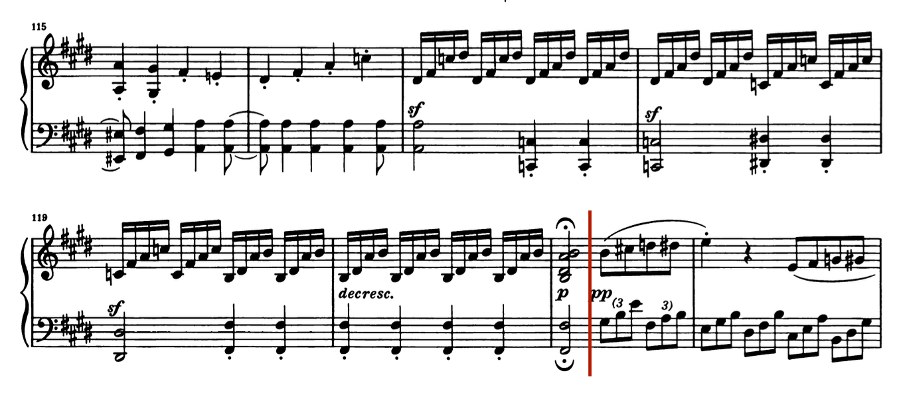
From the end of m. 112 the syncopated rhythm passes to the left hand; the right hand returns to on-the-beat octaves. From m. 117 the right hand repeats a sixteenth-note arpeggio in the same register, with F♯ emphasized. Throughout the piece, when driving toward or resting on the dominant, the V often appears in inverted form; here too that trait is evident in the bass’s emphasis on F♯ rather than B.
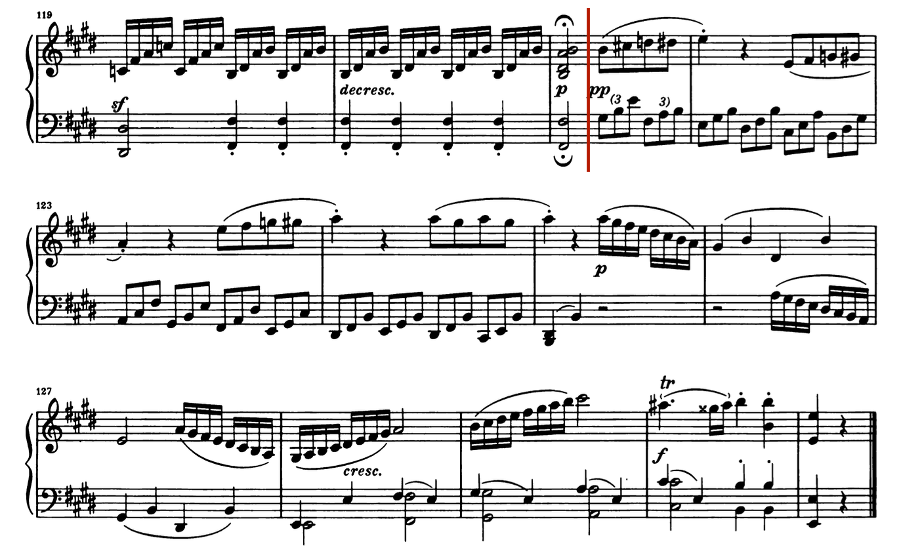
Transforming A’s subject, the music races toward the close. The left hand repeats A’s first subject verbatim, while the right hand ornaments it with chromatic motion. Drawing on A-section elements, the piece unfolds and, at mm. 130–131, ends with a perfect authentic cadence, bringing the movement to a close.





The third movement, in E major and 4/4 with the marking Allegro commodo, is laid out as a rondo: A–B–A–C–A–B–A.
A
It begins in E major. In the right hand, the opening figure leaps from a single note to an octave, a gesture reminiscent of the first movement’s first theme, thereby projecting inter-movement unity.
The A section’s main building blocks are: a right-hand figure that recalls the first movement, a left-hand triplet accompaniment, a descending sixteenth-note line at m. 4, and polyphonic writing that checks the flow and moves in quarter-note units at mm. 5 and 7. At mm. 7–8 a V–I perfect authentic cadence in E major is heard.
The next phrase reprises the first. The first four bars return verbatim. From m. 12 the music develops using the descending sixteenth-note line; a figure that had previously appeared twice only in the right hand now alternates between the hands. From m. 14 the harmony modulates to B major, the dominant. The line that had been descending at m. 17 ascends at m. 18 and is developed anew; after two ascents, with a grace note, a cadence in B major arrives and the music proceeds. The boxed figure in this span also recurs repeatedly.
B
The music continues in B major, the dominant of A. Compared with A, B is relatively short and is characterized by wide leaps. It can even be heard as a theme built from the boxed figure used in A. Befitting its brevity, the design is simple, with tonic and dominant strongly emphasized. With the cadence at m. 30, the piece returns to A. Through a chromatic bass B–A♯–A, it modulates back to E major.
A′
The A section reappears. The first eight bars are identical to the initial A in the tonic. From m. 38 the music moves to the parallel minor (e minor) and is developed; following a left-hand bass that descends by seconds, it moves naturally to G major, the relative of e minor. From m. 42, over a dominant pedal in G, the principal motive—the descending sixteenth-note figure—is repeated. Over four bars the repetition emphasizes V of G; at m. 46 the sixteenth-note figure is developed once more and the piece moves on.
C
Proceeding from V of G, the C section begins on I. In the left hand, staccato V–I motions appear with little large-scale movement. In the right hand, the triplets formerly used as the left-hand accompaniment in A now become the main rhythm and drive the discourse. At m. 50 the harmony turns to a minor and presents V–I twice through m. 53. A notable detail: when the right hand is active, staccatos are placed on the strong beats (except the second)—a striking surface feature.
At m. 54 the music modulates to b minor. The left hand’s span grows more expansive: after the initial V–I, it traces VI – ii⁶ – V – I, lengthening the left-hand phrase. As in the a-minor passage, a cadence in b minor is repeated twice, then the piece moves on.
The continuation further develops figures heard thus far. The left hand’s triplet-based arpeggios now range more widely. The bass line in the left hand descends by seconds in two-bar units, and in the process the music naturally moves to e minor. At mm. 64–65 a V⁶₄ in e minor leads to i.
From m. 66 the passage begins as the C section first did. Unlike the earlier start in G major, it now begins in e minor, its relative. The left hand again enters with V–I. From here the left-hand motion changes, the right hand becomes more fragmented, and the phrase units shorten. A descending line with decrescendo further distinguishes this span from the earlier one. From m. 76 one can hear the preparation for the return of A: over a dominant pedal, the triplet arpeggios push forward.
At m. 80 the line climbs chromatically from the low register up to high B, re-emphasizing the dominant. The music then returns to the tonic E major, and A reappears.
A″
This reprise proceeds much like A and begins again in E major. Although the figure itself does not change, a key-scheme difference emerges: unlike A, whose second phrase modulated to B major, A″ modulates to A major. With a cadence in A major, A″ closes and the music turns to B′.
B′
Apart from key, B′ is the same as B: instead of starting in B major, it now begins in A major. Another change arrives at m. 104, where the harmony shifts—notably—to F major, a flat-side key. Through the chromatic line F–F♯, E–D♯ in mm. 105–107, the harmony proceeds to V of E, leading to the final return of A.
A″′
This is the last reprise of A, beginning as before in E major. The most striking new feature is the right-hand rhythm: unlike the previous A’s that moved on the beat, this third reprise shifts the right hand off the beat with syncopation; combined with the left-hand triplets, this yields a far more rhythmically intricate feel.
From the end of m. 112 the syncopated rhythm passes to the left hand; the right hand returns to on-the-beat octaves. From m. 117 the right hand repeats a sixteenth-note arpeggio in the same register, with F♯ emphasized. Throughout the piece, when driving toward or resting on the dominant, the V often appears in inverted form; here too that trait is evident in the bass’s emphasis on F♯ rather than B.
Transforming A’s subject, the music races toward the close. The left hand repeats A’s first subject verbatim, while the right hand ornaments it with chromatic motion. Drawing on A-section elements, the piece unfolds and, at mm. 130–131, ends with a perfect authentic cadence, bringing the movement to a close.