The fourth movement is a sonata-rondo whose themes and episodes alternate in the layout A–B–A–C–A–B–A. The total length is 113 measures, giving the movement a relatively small scale. In this sonata, the first movement is large, whereas the remaining movements are comparatively small. Each section shows irregular phrase lengths (9, 8, 7 bars, etc.) while still keeping a traditional rondo construction.
Exposition
A (First Theme)
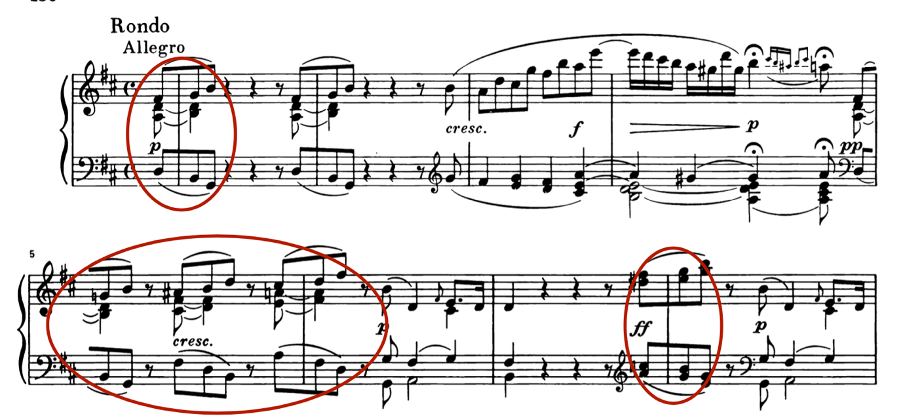
The A section begins in D major. Overall, the two hands often move in contrary motion. The contrary-motion figure that functions as the first motive returns after a four-bar half cadence, and when it returns its number of repetitions increases and it becomes more extended. After an imperfect cadence in m. 7 the motive appears once more, continuing to drive the whole A section. Another hallmark is that the movement begins with an anacrusis and every phrase enters on a weak beat. With the cadence at m. 9, the music moves on.
B (Second Theme)
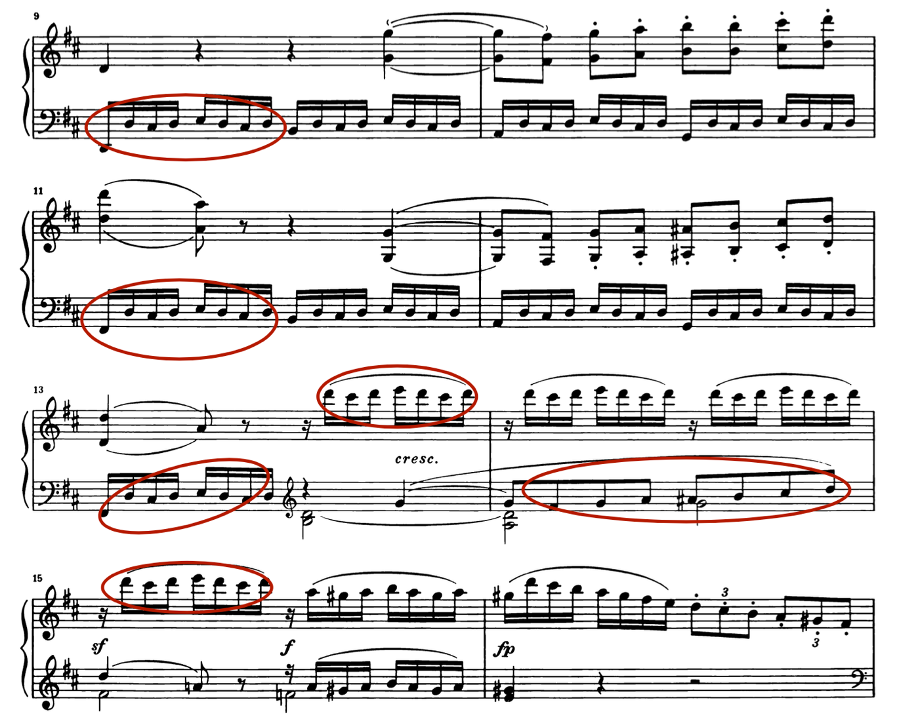
The B section divides into two sentences. In the first sentence, the main motives are the left-hand accompaniment pattern and the right hand’s octave, staccato, sequential melody. After one repetition in the home key of D, the harmony moves toward the dominant key A major. Because the tempo is fast and chromatic writing appears continually, it is not easy to feel a firmly settled key center. From m. 13 the accompaniment figure formerly in the left hand is taken up by the right hand as well and is further developed. At m. 16 a descending right-hand line arrives on V of A major, leading to the next sentence.
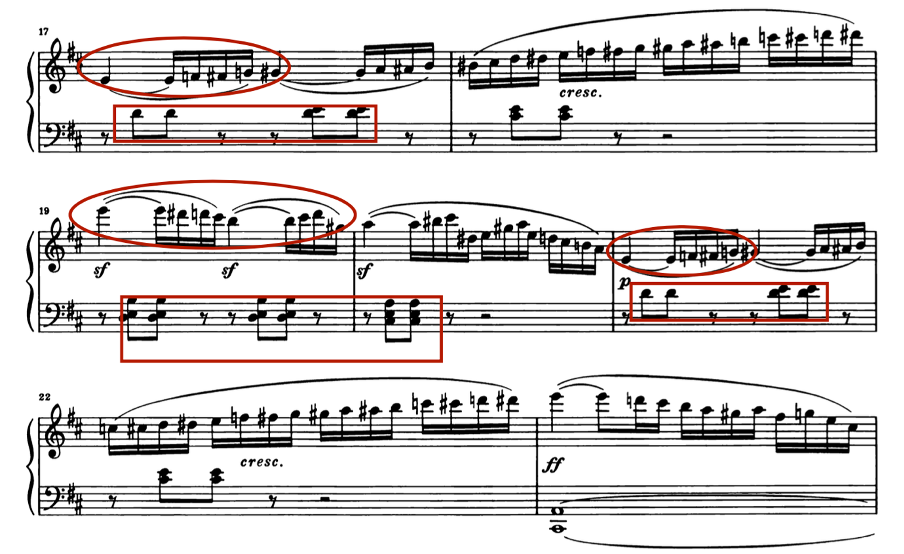
The continuation unfolds with new motives. Whereas earlier the melody began with eighth-note ties across the strong beat, here it is tied in sixteenth notes. The right hand presents a tied sixteenth that ascends chromatically, while the left hand gives an accompaniment of repeated notes after an eighth-rest; these form the chief motives. The ascending idea at m. 17 is transformed into a descending one at m. 19. From m. 21 the opening material of the sentence returns; amid continuous chromatic motion the harmony naturally modulates back to the tonic. In mm. 23–24 V of D major appears, and the music proceeds to A.
A′
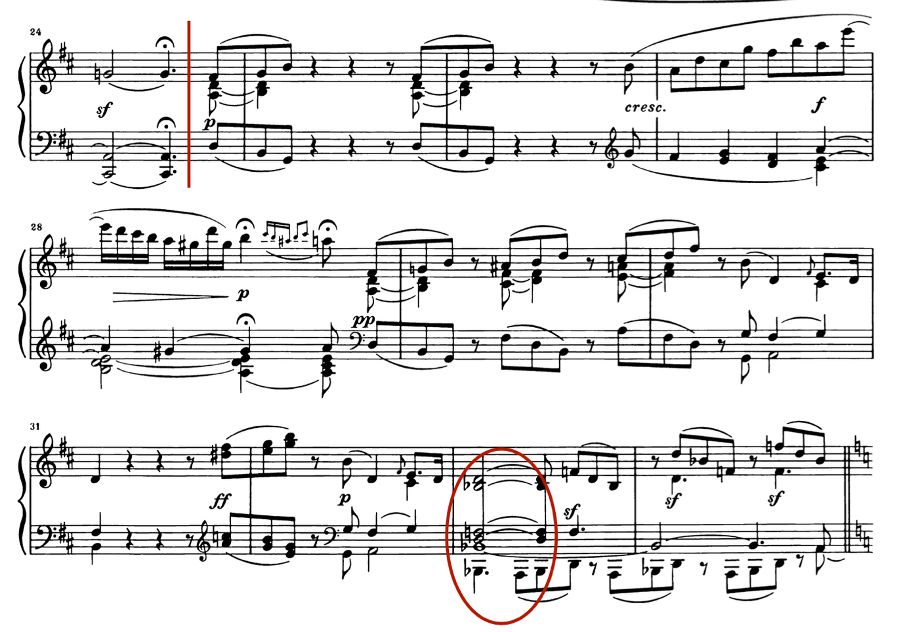
On the whole, A′ resembles A. Notably, at m. 33 the cadence is not in D major: instead an imperfect cadence appears on VI of d minor (borrowed chord). Thereafter the earlier contrary-motion motive returns in retrograde-like guise, with hand-to-hand rhythmic cross-accents, and the music moves on to the next part.
C (Development)
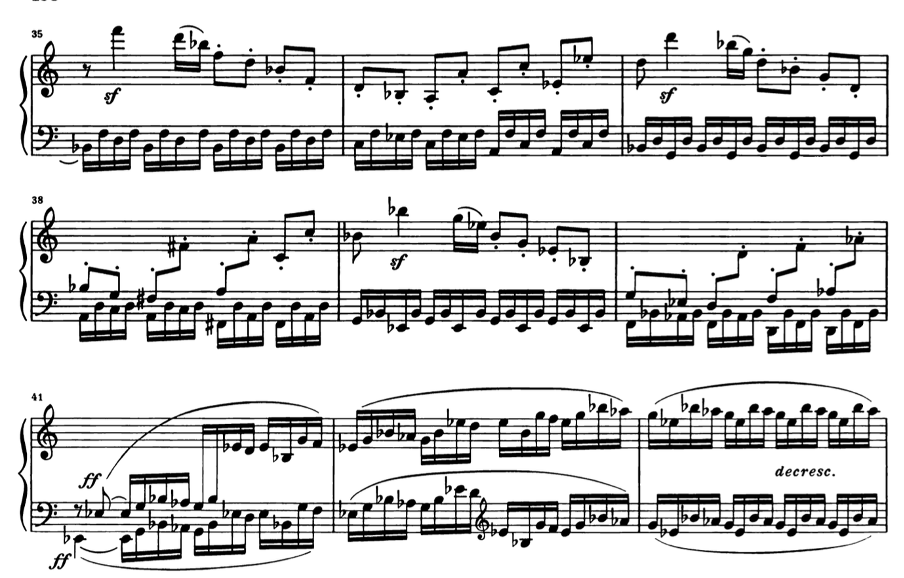
The C section also comprises two sentences and, continuing from what preceded it, begins in B♭ major. It transforms elements used in A and employs them as the motives of this section; one can hear descending arpeggios and staccato contrary motion, among other features. The left hand carries a rapid sixteenth-note accompaniment, lending greater drive and creating a sense of contrast and heightened development compared with earlier spans.
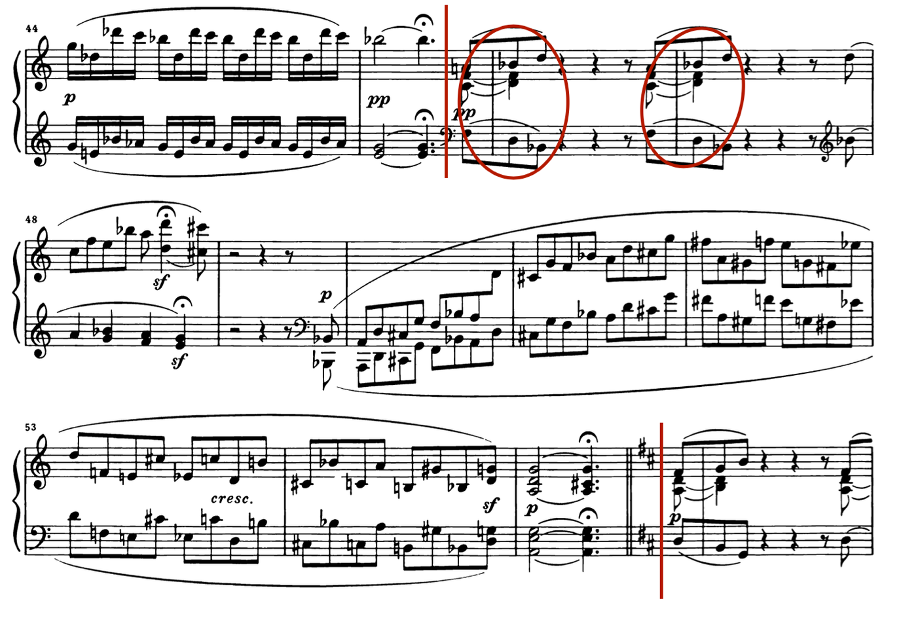
In the second sentence of C, the A-section motives are shown more overtly and then developed. The first motive is restated literally in B♭ major. At m. 50 an arpeggiated figure from A is played in unison and lengthened, and together with chromatic motion it rushes toward cadence. Over the course of this process the harmony naturally returns to D major; at m. 55 a V⁷ half cadence ushers in the reprise of A.
Recapitulation
A
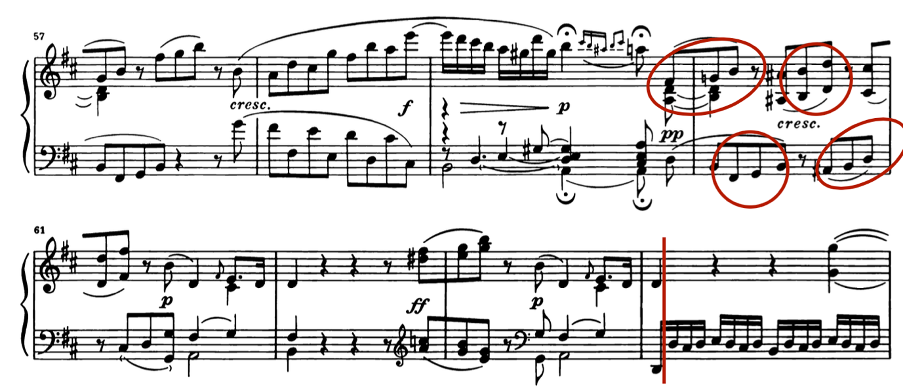
The reprise of A is again similar to its earlier statements. The motive that appears at m. 60 proceeds with cross-rhythms between the hands, just as in the immediately preceding return of A. Here, for the first time, the motion is parallel rather than contrary—another distinctive feature. Thereafter the hands resume moving together in the same rhythm, and the span closes with a cadence.
B
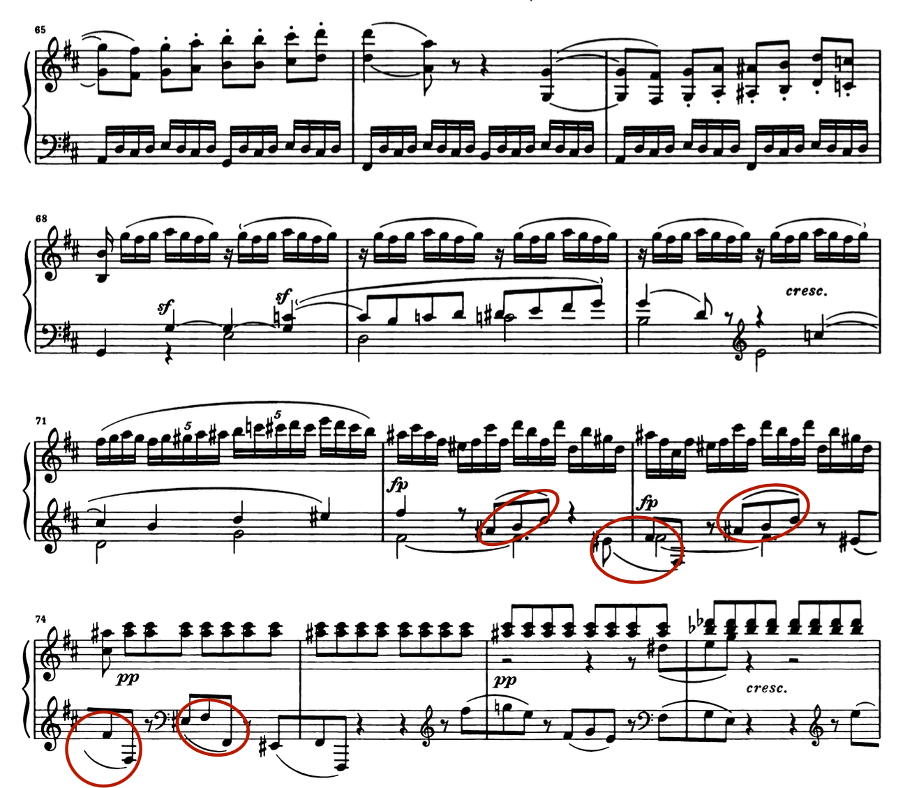
The music proceeds to B. Unlike the exposition—where B divided into two parts—here one enlarged span appears. Up to m. 71 the writing follows the exposition almost exactly. From m. 72, fragments of the A-section motive appear in the inner voice; these fragments are developed within the inner parts, gradually changing their shape. What had moved in a single direction now retains only the rhythm while the melodic direction keeps shifting. From m. 74 a right-hand repeated-note figure appears—the same idea heard later in B during the exposition, now presented in part rather than in full.
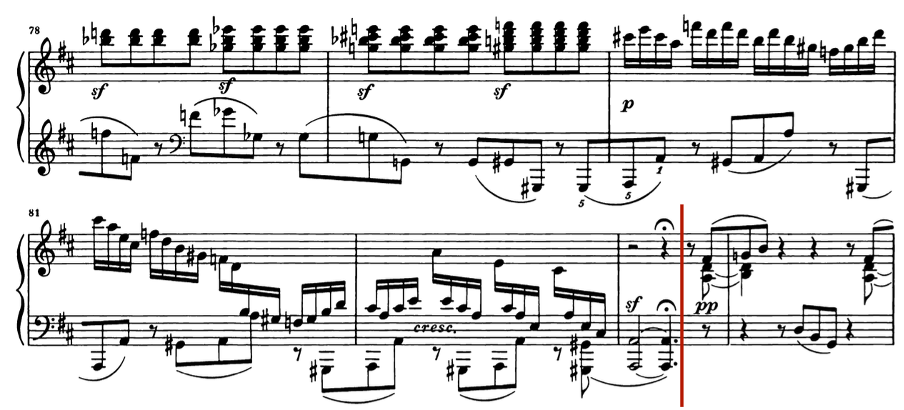
The preceding elements are further expanded and developed. The leaps of the motive formerly used in the left hand become more daring. Harmonically, chromatic progressions continue. One often hears subdominant-function chords moving toward V of D major; pitches G♯ and B♭ appear frequently. The previously brilliant music quiets to a gentle half cadence at m. 83, and the piece returns to A once more.
A
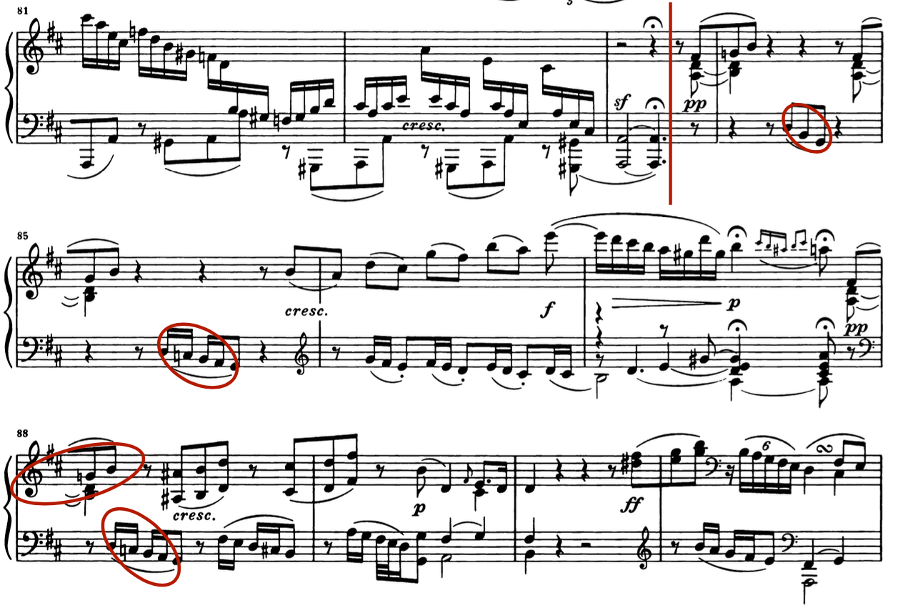
This is the final reprise of A. One can clearly perceive variation and development of the motives. The earlier two-hand contrary motion no longer appears in unison; instead, the entry beats differ—sometimes overlapped, sometimes one hand begins just after the other—so that even within the reprise there is variety. The eighth-note motive is transformed into sixteenth notes: it keeps the same directional tendency but sounds more ornate and developed. At m. 91 the idea is developed with eighths, sixteenths, and sextuplets, and the span presses on to the cadence. With the cadence in m. 92, the music moves to the coda.
Coda
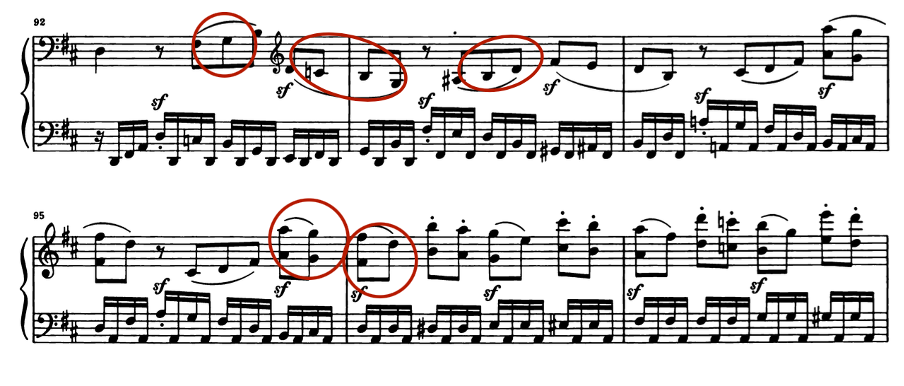
Over a sixteenth-note accompaniment, the right hand presents the oft-heard eighth-note motive. The three-note link grows to four notes and then back to two; staccato is also employed—demonstrating how a simple figure can be used in various guises.
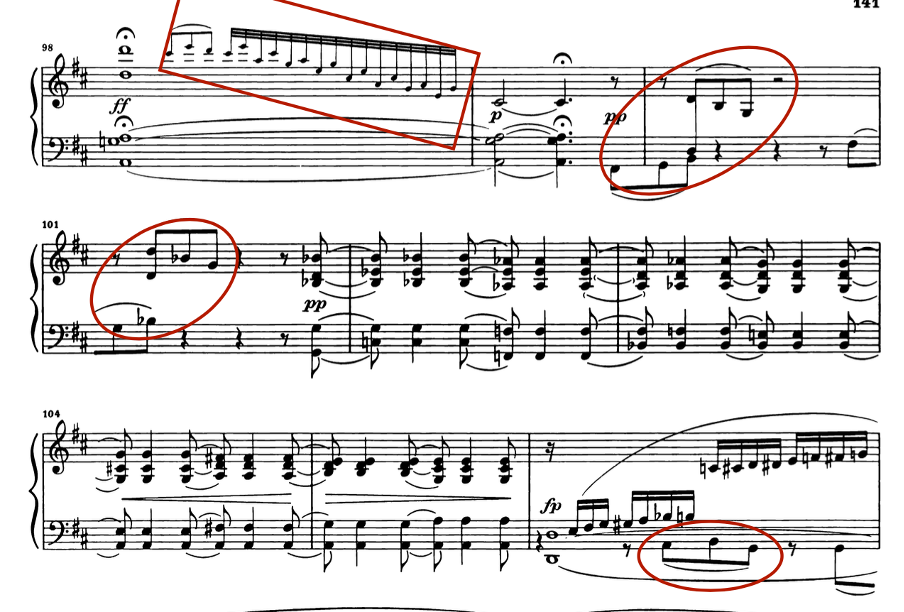
The coda is large in scale compared with the other parts. The motives appear in diverse forms, and many combinations of earlier elements are heard.
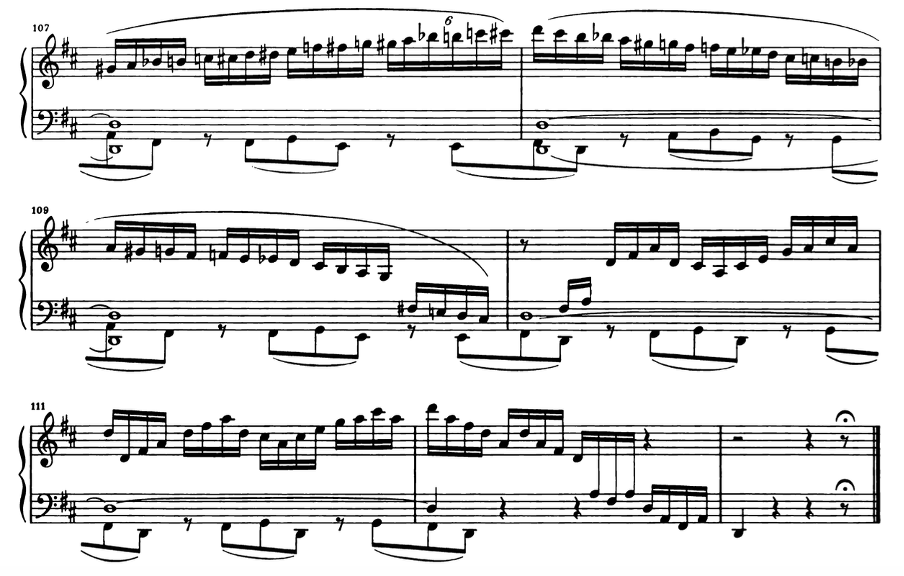
Over a tonic pedal, the A-section motive continues in the left hand, while the right hand presents chromatic sixteenth-note scales and arpeggios of the I chord; the work then comes to its close.





The fourth movement is a sonata-rondo whose themes and episodes alternate in the layout A–B–A–C–A–B–A. The total length is 113 measures, giving the movement a relatively small scale. In this sonata, the first movement is large, whereas the remaining movements are comparatively small. Each section shows irregular phrase lengths (9, 8, 7 bars, etc.) while still keeping a traditional rondo construction.
Exposition
A (First Theme)
The A section begins in D major. Overall, the two hands often move in contrary motion. The contrary-motion figure that functions as the first motive returns after a four-bar half cadence, and when it returns its number of repetitions increases and it becomes more extended. After an imperfect cadence in m. 7 the motive appears once more, continuing to drive the whole A section. Another hallmark is that the movement begins with an anacrusis and every phrase enters on a weak beat. With the cadence at m. 9, the music moves on.
B (Second Theme)
The B section divides into two sentences. In the first sentence, the main motives are the left-hand accompaniment pattern and the right hand’s octave, staccato, sequential melody. After one repetition in the home key of D, the harmony moves toward the dominant key A major. Because the tempo is fast and chromatic writing appears continually, it is not easy to feel a firmly settled key center. From m. 13 the accompaniment figure formerly in the left hand is taken up by the right hand as well and is further developed. At m. 16 a descending right-hand line arrives on V of A major, leading to the next sentence.
The continuation unfolds with new motives. Whereas earlier the melody began with eighth-note ties across the strong beat, here it is tied in sixteenth notes. The right hand presents a tied sixteenth that ascends chromatically, while the left hand gives an accompaniment of repeated notes after an eighth-rest; these form the chief motives. The ascending idea at m. 17 is transformed into a descending one at m. 19. From m. 21 the opening material of the sentence returns; amid continuous chromatic motion the harmony naturally modulates back to the tonic. In mm. 23–24 V of D major appears, and the music proceeds to A.
A′
On the whole, A′ resembles A. Notably, at m. 33 the cadence is not in D major: instead an imperfect cadence appears on VI of d minor (borrowed chord). Thereafter the earlier contrary-motion motive returns in retrograde-like guise, with hand-to-hand rhythmic cross-accents, and the music moves on to the next part.
C (Development)
The C section also comprises two sentences and, continuing from what preceded it, begins in B♭ major. It transforms elements used in A and employs them as the motives of this section; one can hear descending arpeggios and staccato contrary motion, among other features. The left hand carries a rapid sixteenth-note accompaniment, lending greater drive and creating a sense of contrast and heightened development compared with earlier spans.
In the second sentence of C, the A-section motives are shown more overtly and then developed. The first motive is restated literally in B♭ major. At m. 50 an arpeggiated figure from A is played in unison and lengthened, and together with chromatic motion it rushes toward cadence. Over the course of this process the harmony naturally returns to D major; at m. 55 a V⁷ half cadence ushers in the reprise of A.
Recapitulation
A
The reprise of A is again similar to its earlier statements. The motive that appears at m. 60 proceeds with cross-rhythms between the hands, just as in the immediately preceding return of A. Here, for the first time, the motion is parallel rather than contrary—another distinctive feature. Thereafter the hands resume moving together in the same rhythm, and the span closes with a cadence.
B
The music proceeds to B. Unlike the exposition—where B divided into two parts—here one enlarged span appears. Up to m. 71 the writing follows the exposition almost exactly. From m. 72, fragments of the A-section motive appear in the inner voice; these fragments are developed within the inner parts, gradually changing their shape. What had moved in a single direction now retains only the rhythm while the melodic direction keeps shifting. From m. 74 a right-hand repeated-note figure appears—the same idea heard later in B during the exposition, now presented in part rather than in full.
The preceding elements are further expanded and developed. The leaps of the motive formerly used in the left hand become more daring. Harmonically, chromatic progressions continue. One often hears subdominant-function chords moving toward V of D major; pitches G♯ and B♭ appear frequently. The previously brilliant music quiets to a gentle half cadence at m. 83, and the piece returns to A once more.
A
This is the final reprise of A. One can clearly perceive variation and development of the motives. The earlier two-hand contrary motion no longer appears in unison; instead, the entry beats differ—sometimes overlapped, sometimes one hand begins just after the other—so that even within the reprise there is variety. The eighth-note motive is transformed into sixteenth notes: it keeps the same directional tendency but sounds more ornate and developed. At m. 91 the idea is developed with eighths, sixteenths, and sextuplets, and the span presses on to the cadence. With the cadence in m. 92, the music moves to the coda.
Coda
Over a sixteenth-note accompaniment, the right hand presents the oft-heard eighth-note motive. The three-note link grows to four notes and then back to two; staccato is also employed—demonstrating how a simple figure can be used in various guises.
The coda is large in scale compared with the other parts. The motives appear in diverse forms, and many combinations of earlier elements are heard.
Over a tonic pedal, the A-section motive continues in the left hand, while the right hand presents chromatic sixteenth-note scales and arpeggios of the I chord; the work then comes to its close.