The second movement is a scherzo in compound ternary form A–B–A. The key is A♭ major, the meter 3/4, and the tempo Allegro molto.
A (Scherzo)
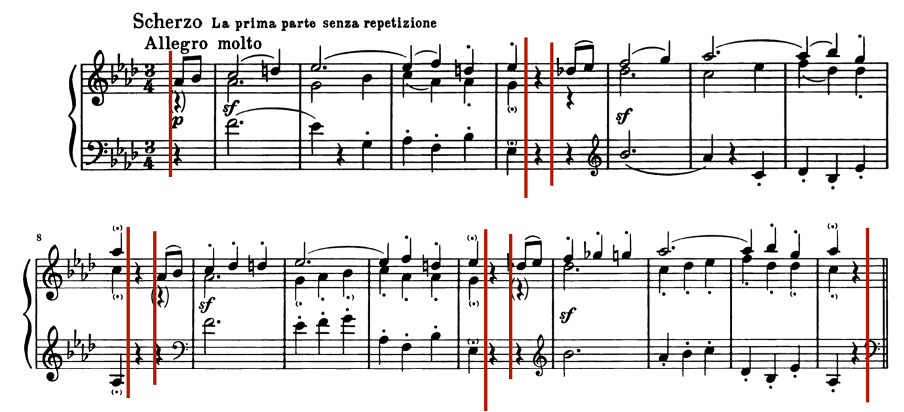
A itself is a three-part design a–b–a′.
A–a begins with an upbeat (incomplete bar) and opens with a sequentially ascending melody. After two bars of ascent, a two-bar cadential idea with leaps and staccato follows. This four-bar unit is repeated four times to complete A–a. Although it starts in A♭ major, the persistent use of D♮ leads to a cadence in E♭ major at bar 4; the next unit then cadences in the home key (A♭). This 8-bar group is repeated, and the subsection ends with a PAC in A♭.
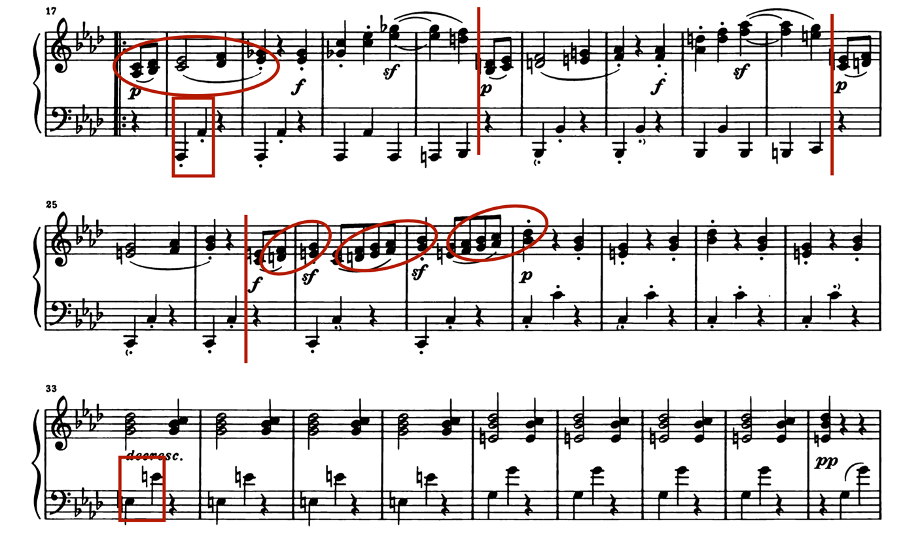
A–b follows. It develops the A–a motive: the same rhythm and melody now take thirds in harmony, and the left hand adds octave-leaping accompaniment. As in A–a, two bars of sequential ascent are answered by two bars of leaping motion; four-bar sequences appear, and sequential modulation is used. The music moves to f minor (the relative minor) and stresses V for an extended span. At mm. 26–27 the motive is accelerated; the same figure is reiterated, and the dominant of f minor is prolonged all the way to bar 44, where A–a′ begins.
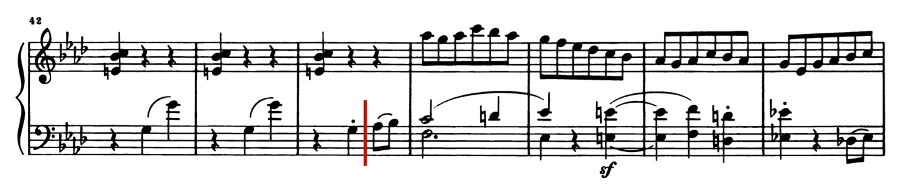
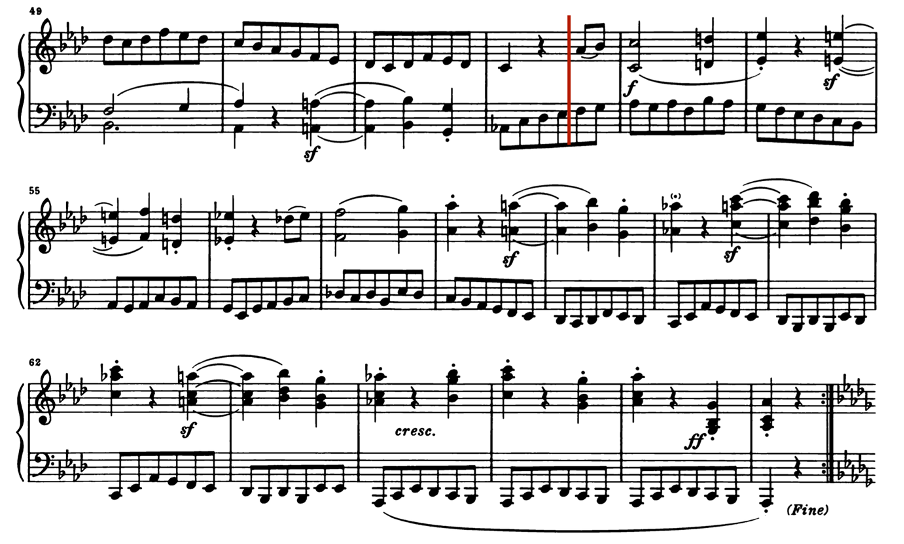
From the end of bar 44, A–a′ starts. A striking detail: although the same melody returns, it begins in f minor (carried over from the preceding context) rather than the tonic A♭; it immediately cadences in E♭ and then proceeds back to the tonic just as in A–a. The melody that was in the right hand now enters in the left, while the right hand introduces a new counter-figure: a continuous eighth-note counter-melody, giving A–a′ its distinctive color.
At bar 52, when the phrase is repeated, the original melody returns to the right hand, and the eighth-note figure migrates to the left. At bar 60 the phrase closes; after a PAC in A♭, a codetta begins. The codetta uses the same figures as before; the right-hand chords add extra tones for greater accentuation. As a tonic prolongation, the codetta brings the A section to a close.
B (Trio)
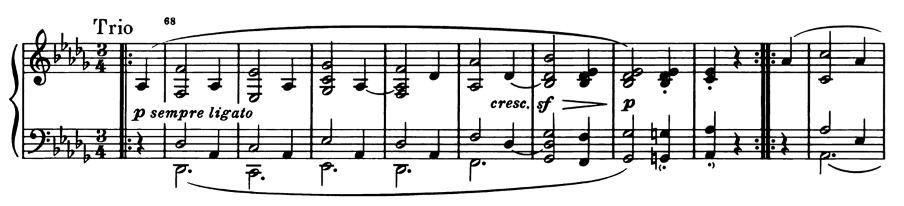
The Trio moves to D♭ major, the subdominant of the home key. Both hands proceed in parallel at the interval of a third, sharing the same rhythm. Throughout the Trio, the texture is built from the “half-note then quarter-note” rhythm and a leaping figure—a shape that can be heard as a transformation of the A–b figure. Considering only the half-notes, one hears sequential stepwise melody; at the eighth bar a half cadence in D♭ appears.
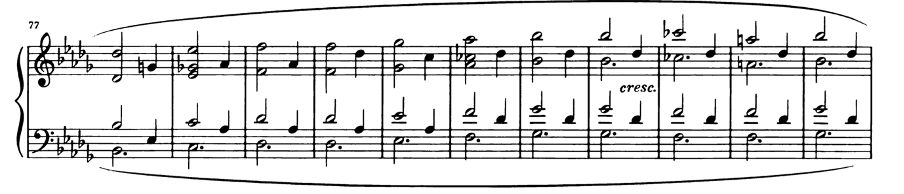
After that cadence, the following passage ascends entirely by sequence. The hands continue a third apart, starting from the dominant A♭ and climbing to the A♭ an octave above, then arriving at a PAC in D♭. Even amid the unceasing ascent, clear four-bar phrases are audible.
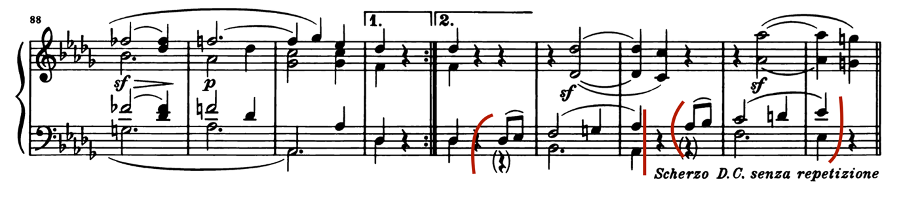
After the cadence the Trio is repeated. At the end of the repeat, the music shows the process leading back to A: fragments of A’s motive appear in the left hand, the key returns to A♭, and the span ends on V, passing back to A.





The second movement is a scherzo in compound ternary form A–B–A. The key is A♭ major, the meter 3/4, and the tempo Allegro molto.
A (Scherzo)
A itself is a three-part design a–b–a′.
A–a begins with an upbeat (incomplete bar) and opens with a sequentially ascending melody. After two bars of ascent, a two-bar cadential idea with leaps and staccato follows. This four-bar unit is repeated four times to complete A–a. Although it starts in A♭ major, the persistent use of D♮ leads to a cadence in E♭ major at bar 4; the next unit then cadences in the home key (A♭). This 8-bar group is repeated, and the subsection ends with a PAC in A♭.
A–b follows. It develops the A–a motive: the same rhythm and melody now take thirds in harmony, and the left hand adds octave-leaping accompaniment. As in A–a, two bars of sequential ascent are answered by two bars of leaping motion; four-bar sequences appear, and sequential modulation is used. The music moves to f minor (the relative minor) and stresses V for an extended span. At mm. 26–27 the motive is accelerated; the same figure is reiterated, and the dominant of f minor is prolonged all the way to bar 44, where A–a′ begins.
From the end of bar 44, A–a′ starts. A striking detail: although the same melody returns, it begins in f minor (carried over from the preceding context) rather than the tonic A♭; it immediately cadences in E♭ and then proceeds back to the tonic just as in A–a. The melody that was in the right hand now enters in the left, while the right hand introduces a new counter-figure: a continuous eighth-note counter-melody, giving A–a′ its distinctive color.
At bar 52, when the phrase is repeated, the original melody returns to the right hand, and the eighth-note figure migrates to the left. At bar 60 the phrase closes; after a PAC in A♭, a codetta begins. The codetta uses the same figures as before; the right-hand chords add extra tones for greater accentuation. As a tonic prolongation, the codetta brings the A section to a close.
B (Trio)
The Trio moves to D♭ major, the subdominant of the home key. Both hands proceed in parallel at the interval of a third, sharing the same rhythm. Throughout the Trio, the texture is built from the “half-note then quarter-note” rhythm and a leaping figure—a shape that can be heard as a transformation of the A–b figure. Considering only the half-notes, one hears sequential stepwise melody; at the eighth bar a half cadence in D♭ appears.
After that cadence, the following passage ascends entirely by sequence. The hands continue a third apart, starting from the dominant A♭ and climbing to the A♭ an octave above, then arriving at a PAC in D♭. Even amid the unceasing ascent, clear four-bar phrases are audible.
After the cadence the Trio is repeated. At the end of the repeat, the music shows the process leading back to A: fragments of A’s motive appear in the left hand, the key returns to A♭, and the span ends on V, passing back to A.